

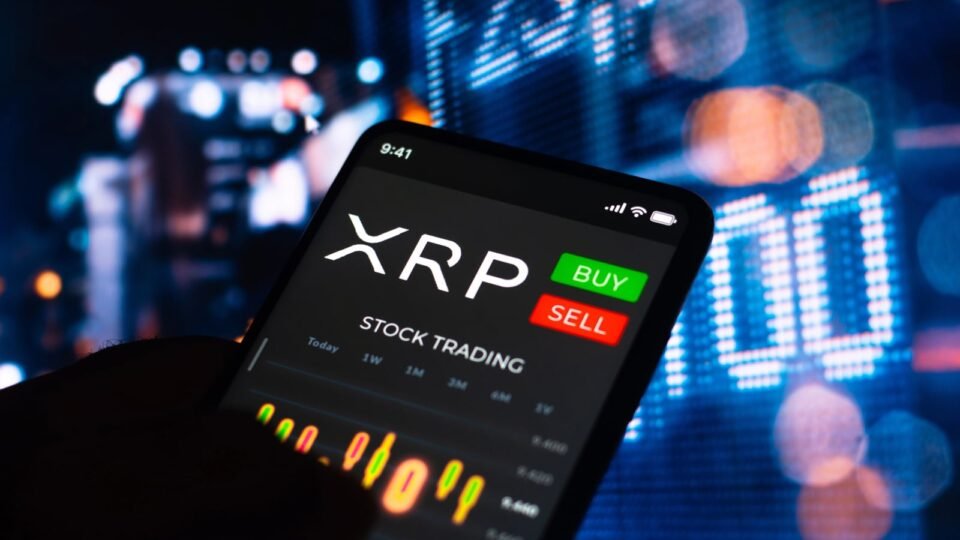
XRP trading in South Korea outpaces the U.S.
Disclaimer: The opinions expressed by our writers are their own and do not represent the views of U.Today. The financial and market information provided on U.Today is intended for informational purposes only. U.Today is not liable for any financial losses incurred while trading cryptocurrencies. Conduct your own research by contacting financial experts before making any investment decisions. We believe that all content is accurate as of the date of publication, but certain offers mentioned may no longer be available.
South Korean retail capital has effectively seized control of liquidity in a Ripple-associated token, turning the local market into the asset’s leading global driver.
While Wall Street is absorbing crypto ETFs, XRP trading volumes in Asia have grown so large that South Korea‘s largest exchange, Upbit, recorded $224.22 million in daily turnover, far outpacing the main U.S. regulated giant, Coinbase, with its $173.38 million.
According to CoinGlass’s market heatmap, Binance remains the global spot market leader with $306.13 million. However, it was the unusually strong interest in XRP within South Korea that created an unprecedented pricing and liquidity phenomenon.
The XRP/KRW pair on Upbit accounted for 15.57% of the platform’s total activity, allowing the asset to surpass even Bitcoin and the stablecoin Tether in liquidity.
Amid this capital shift, the token’s price is trapped in the $1.44–$1.50 range, while exchanges are recording a daily decline in volume following a powerful weekly rally in which XRP gained more than 14–15%.
The answer lies in pragmatic market mechanics, not blind optimism. First, a strict regulatory dead end has played a role: retail investors in South Korea are completely prohibited from trading leveraged crypto futures.
Without the ability to short, traders are forced to seek volatility exclusively in the spot market, where XRP — with its low fees and near-instant speed—has become an ideal tool for quick scalping. In the last hour alone, the Korean session generated $23.71 million in net spot volume on Upbit.
The situation is also being fueled by prolonged stagnation in traditional markets. The national stock index, KOSPI, is stuck in a tight range, prompting middle-aged local investors to liquidate traditional stock portfolios en masse and move their money into crypto.
Meanwhile, in the United States, institutional funds are currently absorbing liquidity, focusing strictly on regulated BTC and ETH. Ripple’s retail brand has historically been closer to Eastern investors: XRP’s weekly trading volume on Upbit has already approached $1.71 billion.
This imbalance of power clearly shows that, despite Ripple’s American roots and years of lawsuits with the SEC in Washington, the asset’s actual price formation is now dictated by Seoul, not by offices in New York.
More Posts About This Newsroom
u.today
-
 Solana Stablecoins Now Book Flights With 300 Airlines
-
 BlackRock Puts Investment Portfolios on Blockchain
-
 Dogecoin (DOGE) Faces Deep Discount as Elon Musk Reappears on Crypto Timeline
-
 Cardano Welcomes New Native Library for Python, Go, Rust and JavaScript
-
 Shiba Inu Rally May Resume: 74 Billion SHIB Netflow Confirms Brewing Demand